



Australia’s economy delivered another strong set of employment figures, extinguishing already fading hopes of an RBA rate cut.
Unemployment fell for the first time in 11 months, dropping 0.2 percentage points to 4.3%. A total of 42.2k jobs were added, with a 55.3k rise in full-time positions offsetting a 13.1k decline in part-time employment. The employment-to-population ratio held steady at a healthy 64%, while participation remained at 67%.
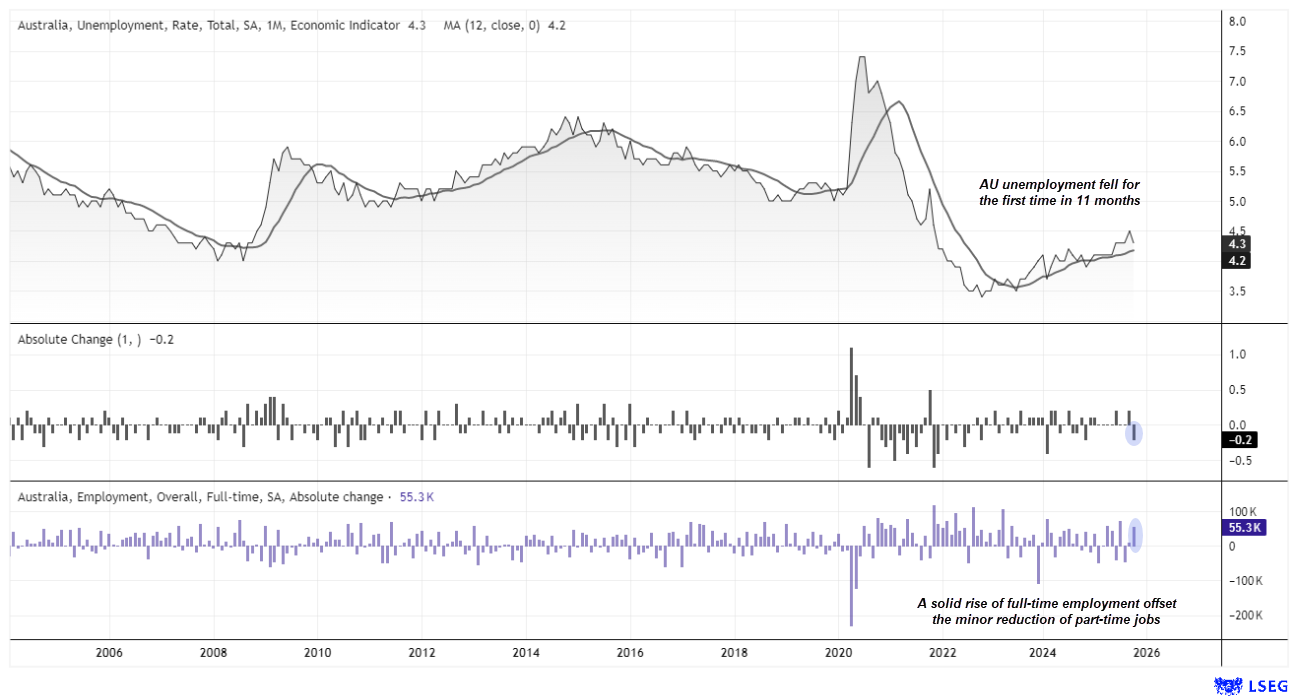
Chart prepared by Matt Simpson – Source: ABS, LSEG
View related analysis:
- AUD/USD, GBP/USD Outlook: AU Jobs, UK Data Dump, US Inflation In Focus
- Australian Dollar Price Action Setups: AUD/USD, EUR/AUD, GBP/AUD
- ASX 200 Evening Wrap: Tech and Banks Extend Losses, WOW Perks Up
- Yen Crosses in Focus as USD/JPY Stalls and CHF/JPY Nears Record Highs
RBA Hawkish Bias Vindicated
The RBA delivered a relatively hawkish hold this month after stronger-than-expected Q3 inflation data.
Governor Bullock had previously warned the Bank would look past rising unemployment if trimmed mean CPI came in at 0.9% or higher — and the 1.0% q/q, 3.0% y/y print effectively buried hopes of a November cut.
Since then, we’ve learned that home loans have surged to a record high, with 40% coming from investors. That’s hardly what you’d expect in a struggling economy and adds weight to speculation that the RBA’s next move could, in fact, be a hike.

Market Reaction: Yields Jump, ASX Slips, Aussie Dollar Surges
Markets were quick to react to the revelation that not only may the RBA have reached their terminal rate at 3.6%, but their next move could be a hike.
- The 3-year yield surged 10bp to 3.8% within minutes of the release.
- SPI 200 futures (ASX 200) fell 0.8%, testing cycle lows — where good news is clearly bad news for Aussie equities these days.
- The Australian dollar rose across the board, sending AUD/USD to an eight-day high, AUD/JPY to a one-year high, and AUD/NZD to a ten-year high.
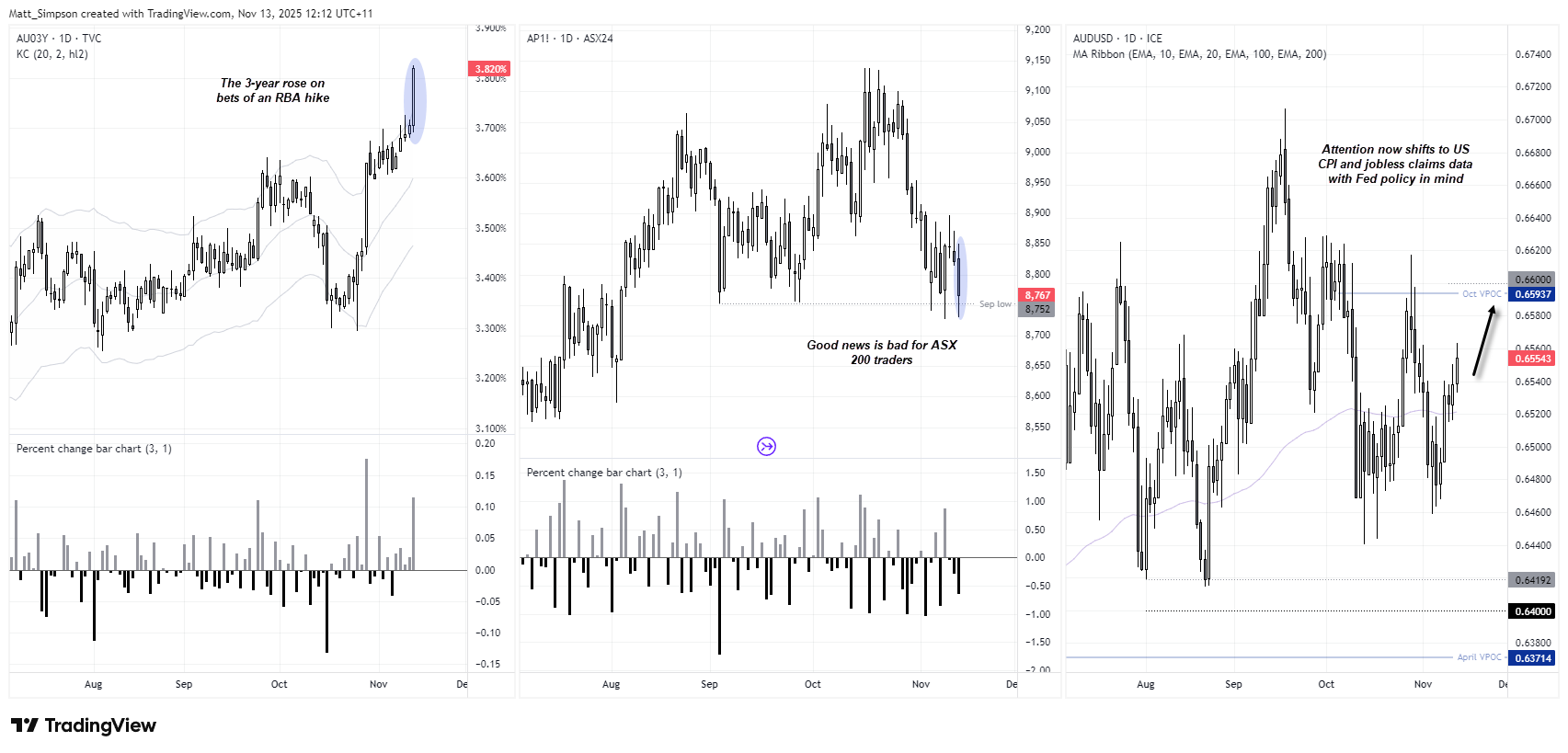
Chart analysis by Matt Simpson – Source: TradingView, ASX

When Could the RBA Hike?
I doubt the RBA will feel compelled to change policy this year — partly to save face and avoid appearing reactionary, but also because they’ll likely want to see the next set of quarterly CPI figures in January. Still, with stronger Q3 inflation, firm employment, and surging home loans, they already have more than enough ammunition to begin laying the groundwork for a potential hike next year.
Remember, the modern RBA moves very cautiously, maintaining “caution on the outlook” in both directions. Since they haven’t publicly acknowledged the prospect of a rate cut, they’ll need to gradually steer expectations over the coming meetings. Their latest forecasts pencilled in a single cut in 2026 — a position that will have to be walked back before they can turn fully hawkish and openly discuss hikes.
For now, a move could come as early as Q2 or Q3 next year, unless the Q4 CPI figures due in January deliver another hawkish surprise — in which case, markets may start pricing in an earlier hike.

Chart prepared by Matt Simpson – Source: RBA, LSEG
View the full economic calendar
-- Written by Matt Simpson
Follow Matt on Twitter @cLeverEdge
How to trade with City Index
You can trade with City Index by following these four easy steps:
- Open an account, or log in if you’re already a customer
• Open an account in the UK
• Open an account in Australia
• Open an account in Singapore
- Search for the market you want to trade in our award-winning platform
- Choose your position and size, and your stop and limit levels
- Place the trade